Inflation doesn’t shout. It nibbles away at choices: fewer trips, smaller gifts, trading steak for cereal. The fix isn’t a hot take on CPI. It’s a paycheck that’s designed to grow on purpose.
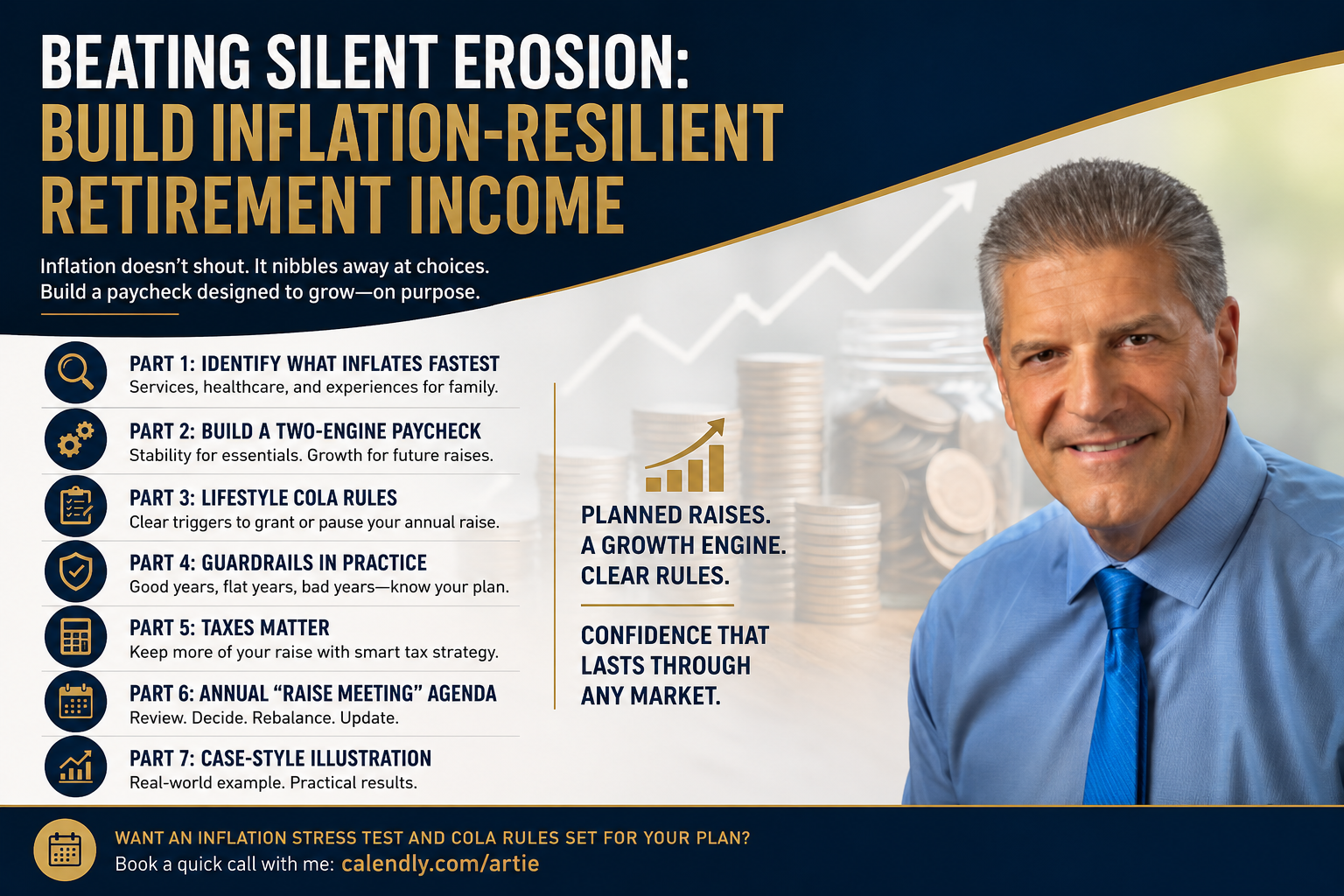
Part 1: Identify What Inflates Fastest in Retirement
- Services and travel, which are labor-heavy.
- Healthcare, including procedures and prescriptions.
- Experiences for family, including flights and lodging.
Part 2: Build a Two-Engine Paycheck
Engine 1: Stability for essentials. Fund with Social Security, pensions, annuity income, and a bond/cash sleeve to anchor the monthly paycheck.
Engine 2: Growth for future raises. Allocate enough to equities and growth assets with a 7+ year horizon so you’re not forced to sell low.
Part 3: Lifestyle COLA Rules
- Baseline raise: Plan for 2–3% increases most years.
- Trigger to grant: If the portfolio is up ≥ X% after withdrawals and Buckets 1–2 are full, approve next year’s raise.
- Trigger to pause: If drawdown is ≥ Y% or the cash bucket dips below Z months, pause the raise. Don’t cut essentials.
Part 4: Guardrails in Practice
- Good years: Harvest from growth to refill stability buckets and approve the raise.
- Flat years: Keep lifestyle flat and review mid-year.
- Bad years: Pause the raise, rely on the cash/income sleeve, and schedule major discretionary items for recovery periods.
Part 5: Taxes Matter to Inflation Resilience
Higher taxes reduce your net raise. Coordinate withdrawal sources so a 3% lifestyle raise doesn’t require a 6% gross withdrawal.
Consider Roth buckets for future raises and tax flexibility.
Part 6: Annual “Raise Meeting” Agenda
- Review the last 12 months’ performance and refill status.
- Decide next year’s raise: approve or pause.
- Rebalance to target risk.
- Update travel and experience plans within guardrails.
Part 7: Case-Style Illustration
A couple needs $9,000/month net and has $6,000 in COLA’d reliable income.
The essentials gap of $3,000/month is funded by bonds/cash, while lifestyle spending is funded by growth.
After a +10% year: harvest gains, refill buckets, and approve a 3% raise.
After a –12% year: pause the raise, keep essentials unaffected, and shift travel to spring next year.
Bottom Line
You don’t beat inflation with hope. You beat it with planned raises, a growth engine you don’t have to touch during downturns, and clear rules that tell you when to grant or pause.
Want an inflation stress test and COLA rules set for your plan?
Book a quick call with me: calendly.com/artie